This month’s storytelling sessions on family and history struck an emotional chord with me. The key words of ‘Quiet,’ ‘Missing People,’ ‘Resilience,’ and ‘Regrets of not Listening’ were especially evocative and stirring. It made me reflect on my own family’s narratives and how they’ve shaped my outlook.
Growing up, I experienced the past as a complex landscape, shaped by the differing attitudes of people around me. Some were open about their experiences, while others were more reticent. My granddad, grappling with life’s challenges, shared stories tinged with a combination of sadness and dark humour. In contrast, my nan chose to share only the happy or funny snapshots, leaving me curious about the full picture. While my biological dad’s absence left a gap in my understanding of that side of my family history, my stepdad filled some of that space with stories I truly cherish hearing now. As for my mum, her unique circumstances have made her heritage a bit of a mystery. Yet, what she does know and share, she always tells with humour.
This has led me to question: How often do we let these fragmented stories define our view of family history? How much are we missing by not delving deeper? It also brings to light the opportunity to reframe our approach to family history. The past doesn’t have to be a place too daunting to explore or too painful to touch. It can be an open book where stories are continually rewritten, perspectives are broadened, and understanding deepens.
Maybe it’s time for us all to become not just storytellers but active listeners, open to the multiple layers of stories that family history holds. As you read on, you’ll encounter diverse voices that echo this sentiment, each offering their unique take on the theme.
Jean Thompson
In our culture, we think of families as either a nuclear family, mum, dad and 2.4 children or as an extended family to include grandparents, aunties, uncles and attendant cousins, but even in our culture the concept of family is changing all the time. Reconstituted families where children from several marriages or relationships need to be accommodated and accepted often with varying degrees of success. In some other cultures, the family includes the whole kinship group or even villages, and children may be reared by people not directly related to their birth. In those environments is there room for family secrets or stories that weren’t known before I wonder?
As our discussions indicated, often family stories do not come to light until after the death of certain significant people. In my own family, for example, I never knew my grandparents as both my parents were orphaned as children. Grandparents can often be the custodians of family history and stories, so there was certain knowledge missing from my family story. Some of that knowledge only came to light after I started researching my family history after both my parents had died. Many unspoken details which had always seemed to hover ghostlike in the background and atmosphere of the family became more explicit, and explained a lot. What a shame I was never able to talk to my parents about these discoveries.
Through my research I have been able to discover first cousins I did not know I had. One of my joys was to go to Canada the year I was 70 as a celebration, with my son and daughter, to meet a maternal cousin I had only recently discovered via an ancestry website.

Another cousin I found had already done a lot of the family history on my father’s side of the family, and because of her research, I was able in November 2018, one hundred years after the end of World War One, to go to visit the grave of my paternal grandfather. He had died in service in 1916. I am not aware that anyone else in the family had ever visited his grave in Mazingarbe, a small town on the France/Belgium border.

I had gone on my own so standing there with all that history behind me was a very poignant moment. I had taken a poppy from England and bought some white flowers from the village, and had also taken a copy of an old family photograph showing him in uniform
Tony Goulding

Genealogy, the study of family history, has become increasingly popular since I began my own journey of discovery in 2001. Back then it was still quite a laborious undertaking, often spending many hours in various County Record Offices. My own studies took me to Worcester, Leicester, and Staffordshire as well as the National Archives at Kew, Richmond, London.
More and more records are being digitized and made available on-line on the various family history websites, such as Ancestry and Find My Past and the various series of Who Do You Think You Are? have further increased the hobby’s popularity. Though I find the ease with which the celebrities stories come to be revealed slightly annoying; many hours of research condensed into an hour-long programme.
It is interesting what prompts people to begin such a search for their forebears, often it is a family secret which they want to uncover or a mystery they want to solve. Or it may be to shed light on a family legend. In my case it was the result of several family bereavements in quick succession which resulted in my coming into possession of a variety of family documents and heirlooms, some going back to the 19th century. For example, this book was a present from my great-grandfather to his wife, Betsey on their 7th wedding anniversary 7th May 1885.
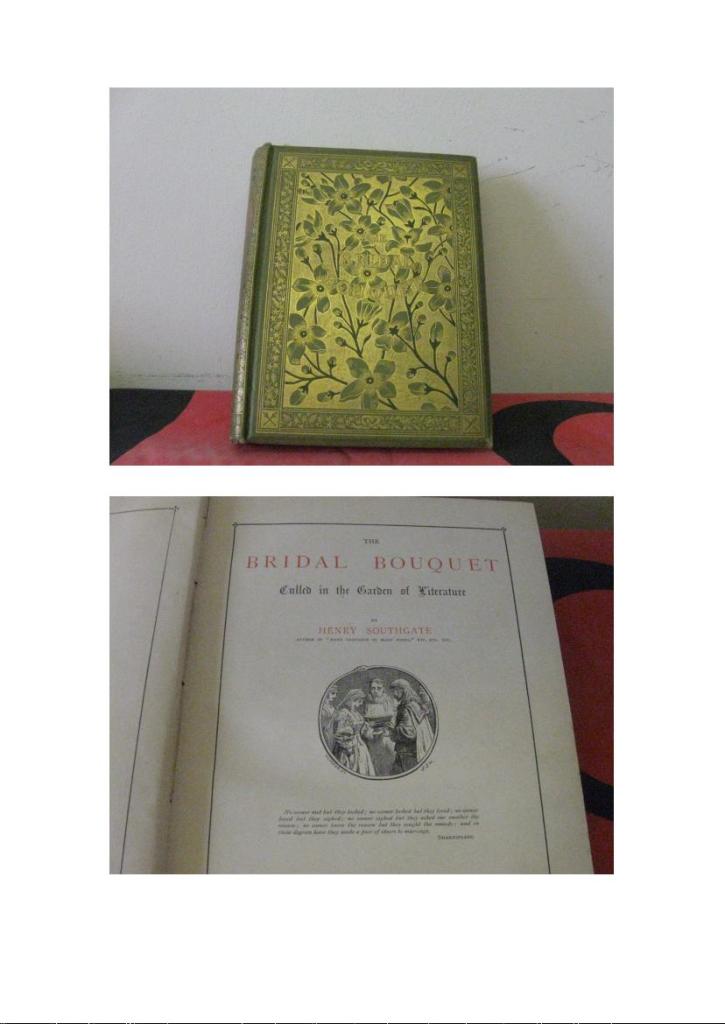
My initial investigation centred on my grandmother’s brothers, one of whom was sent to Canada as a “British Home Child” whom she had visited when in her 70s, and another who was a casualty of World War One. In her will my grandmother remembered him by leaving a legacy to the British Limbless Ex-Servicemen’s Association.

However, I soon uncovered some long-buried family secrets one of which concerned my maternal grandfather who I never met as he died before I was born. To me he is both an enigma and something of a hero.
This is the watch given to him by his parents on his birthday 7th February 1896.
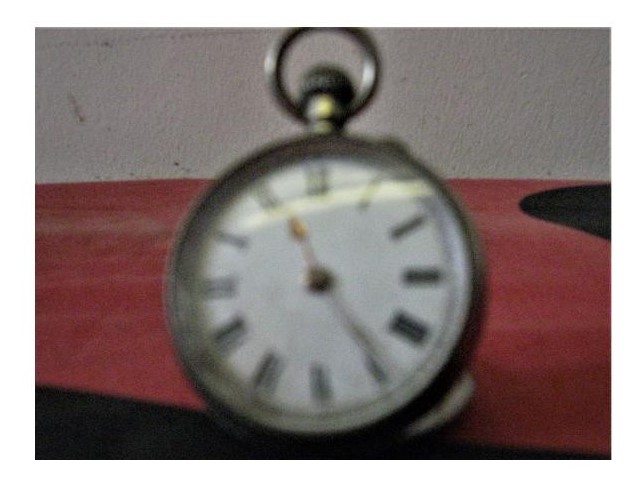

Over time I have discovered heroes, one who served in the Union Navy during the American Civil War, and villains, one of whom died in prison in Edinburgh. All of them weaving a part of the intricate tapestry that led to me being born.
Shane Murray
I never knew my grandfather Patrick but my mother’s stories of his life and times fired my imagination. The eldest son of a farmer, he should have inherited the farm but his father cut him off when he refused to postpone his marriage to my grandmother, the fair Ellen. He went to work for the DeMontmorency family on the Castlemorris estate as a groom, caring for the horses. He must have made a great impression on his employer because he was sent to Peckham in London to be trained as a driver/mechanic. On his return he became the family’s chauffeur. I like to imagine him in his uniform, gloved and booted, cap at a rakish angle, opening the doors of a highly polished limousine for the ladies attired in the fashions of the day.
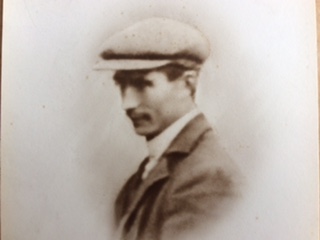
In 1922 at the age of 46 Patrick left his family to enlist in the Irish Free State Army. This was at the time of the Treaty which gave 26 counties their independence from Britain but divided north from south and plunged the newly established state into civil war. His eldest son was about 18 at the time and sided with the anti-Treaty rebels, thus putting him on the opposing side. Thankfully, father and son never encountered each other in battle. Grandad drove a Crossley Tender, a troop carrier made in Manchester, first used by the dreaded Black and Tans. One day he drove into an ambush on the road between Clonmel and Cahir in Tipperary. He was shot in the right arm but his comrade beside him was killed outright.
This brief foray into recent Irish history is important for me and mine. Had Patrick been that fatal casualty, my mother would not have entered the world the following year and enjoyed the happiest of childhoods. She left Ireland around 1946, shortly before her father died. She deeply regretted “leaving too soon”, wishing she had stayed to help care for him. Had she stayed, being the last in the nest, she would have struggled to leave her mother and, therefore, might not have met my dad.
She liked to tell us about one of her admirers who, keen to keep her in Kilkenny, presented her with not one but two boxes of Black Magic chocolates – a ‘staying’ gift if you like. This was not sufficient inducement – so off she went to Manchester where she found my dad and together they wrote the next chapter in our family history.
Margaret Kendall
My Dad enjoyed remembering his Irish grandmother, who moved in with his family when he was a child. She knew Gaelic: he and his sister used to ask her to say things in Irish and giggled to hear what she said. She was from North Sligo, talked of a big mountain near where she lived and of being given the job of chasing boys away from apple trees when she was young. I don’t know when she moved to England, but in 1876 aged 20, she was working at Blackburn Infirmary as a domestic servant when she married her husband, a porter at the same hospital, five years older and also from Ireland. He died in his early forties so before census records gave more detail about where in Ireland people were born.
In 2012, I spent a very special, memorable holiday in Sligo with my Dad. He was in his nineties. We’d sadly lost my Mum after a long illness the previous year, and planning the trip helped us through the difficult months which followed. He’d not been to Ireland before and was keen to go. The most likely big mountain in his grandmother’s childhood was Ben Bulben. We were very surprised to see how much it looked like Pendle Hill, near where I grew up and where my Dad still lived!


While we were on holiday, I spent a morning in the library in Sligo. The family history librarian was interested in the apple tree story. Ordnance survey maps from the 1830s showed big houses, some with walled gardens which would give the possibility of apple trees. Maybe my ancestors were employed on one of those estates belonging to the Anglo-Irish gentry living in that part of Ireland? I found a Catholic baptism record with my great-grandmother’s name, for the right year, 1856. We went to look at the church in Ballymote and the named place of birth, the hamlet of Cloonagashel, on a ridge with a view of Ben Bulben on the horizon. We couldn’t prove it, but we enjoyed imagining that we had found where she was born and seeing the lovely countryside all around.
Many more resources for Irish family history are now available on the Internet and I’d love to be able to tell my dad that now I might have found where his grandfather was from. Again, I can’t be sure, but wouldn’t it be a good excuse for another holiday in Ireland!
Pauline Omoboye
24th December 1956 (she came, she saw, she conquered)

She came to this land '56
She sailed the ship for weeks
Left a homeland and her family
For riches she did seek
Followed a husband to a country
For a future she could not predict
To a land of 'milk and honey'
She was made to suffer it
She came with a tiny baby
Six weeks old, lay in her arms
To a land so cold and lonely
Nothing to protect her from all harms
To a house with many strangers
In a room fit for a pig
But she made this place a home
And raised her kid
And like all the wives before her
She soon found a factory job
And woke in the early hours
Just to earn a few measly bob
Left her kid with an unworthy minder
Set out at the crack of dawn
And with fifteen others in a minibus
They would travel until morn
The conditions they were treacherous
And although she did despair
She came to make some money
Just enough to pay the fare
And send for the son she left behind.

No money to bring him on the boat
And every time she mentioned his sweet name
It brought a lump to her throat.
She came to fend for her family
Left behind in that beautiful land
Where the sun shone and reflected
Its beams amongst the sand
Where the sea so blue in shimmered
And rippled laughter in its depths
She came and barely whispered and often wept.
Many a tear she shed in silence
And every two years she bore a child
She cooked, she cleaned, and she polished
Worked all the hours that God sent
But hard work and perseverance
Paid off in the end
She came
She saw
She conquered
She’s my mother and my friend.
© Pauline Omoboye
Sue Ash
I was interested to hear about the differing family relationships in which members of the group grew up. I have long found that when I get chatting to some people and really listen, show an interest and ask small questions, people open up about their lives, and so many have something unexpected to tell. Each person is unique in that it is very personal and important to them.
Like many people, I do think my childhood was a little different to most.
My memories are almost exclusively related to my mother’s family. I can only remember two occasions when I met any of my father’s family, and don’t recall ever meeting my paternal grandmother.
My father was at sea, so not at home for long periods, but we used to visit him and stay on the ships when they were docked on the South East coast for a few days. The discussion at the group awakened my interest in my father’s history, or rather that of my great grandfather. Although my father was born and grew up in Northen Ireland, the family name is Scottish, and I would like to know more about my Scottish ancestors and will likely pursue this.
My mother was one of twelve children, with eight sisters and three brothers. The sisters were very involved with each other throughout their lives and their children were drawn into the busy family network. Family and family events were priority over everything else, and to miss my grandmother’s annual birthday get together was considered unforgivable.
My maternal grandparents lived by a river in Hertfordshire – they raised chickens and grew tomatoes to sell to the weekend anglers. I used to go boating on the river with other children – no life jackets, just the older ones charged with looking after the smaller ones. I’m not sure that any of us could swim! And I remember seeing what may have been some of the last horse drawn barges going by.
I was one of many grandchildren, but I was fortunate to have a close relationship with my maternal grandmother during my childhood. I believe many of my values and my outlook on life, what I consider important or unimportant, were influenced by her. This is probably why my own mother never really understood me!

 The Stories of Our Lives