Hear this blog post read aloud:
It wasn’t difficult to turn back the clock to our schooldays!
We started by sharing a word or two each about our memories and/or the emotions they stirred. This resulted in a list which illustrates the variety of our responses, both positive and negative: unpredictability, learning, discovery, stickers, administration, teachers in my family, nightmare, corporal punishment, humiliation, envy, inequality, lost friends, solidarity, structure, judgement, uniforms, crowded trains and buses, a particular teacher, a flood of memories.
Joe Sykes then guided us skilfully in a time of individual reflection, using the prompts:
- What experiences at school have shaped you?
- What educational experiences did you have outside of school? (e.g. school trips, residentials etc.)
- What happened at break time and lunch time? (e.g. sports, arts, music, drama, involvement with the local community)
He followed this by sharing his own story, illustrated by an amazing collection of photographs, scrapbooks and memorabilia from both his primary and secondary education. How wonderful to take part in the school production of the musical, Grease!

Then the room filled with noise as we discussed our responses in small groups. There was such a lot to say, no matter when we’d left school. It was fascinating to get back together at the end and hear more about one another’s experiences. Some of us tell our stories in the blog post which follows. We hope they’ll prompt memories of your own.
Joe Sykes
Back to school… it isn’t really a tale I can “tell” because it isn’t over; I’m a secondary school teacher so every day the story continues. With new anecdotes from lessons and parents’ evenings and school trips, you’re never short of material for conversations with colleagues over a breaktime brew.
One of the best things about being a teacher (apart the thirteen weeks’ holiday a year, and anyone who denies this is being far too holier than thou) is that when the question “what do you do” comes up with a new acquaintance, they instantly know from my answer exactly what I do, day in, day out. (Perhaps this is a good opportunity to apologise to every recipient of my vacant stare who has ever told me they work in “comms”.)
I, myself, attended a tiny primary school: Wilberlee Junior and Infant School in the Yorkshire Pennines outside Huddersfield, with only three classes in the whole school. The erstwhile school song “Wilberlee Welcome”, penned by a pupil two years above me) can tell you much more about the school than any Ofsted report:
Wilberlee is small and friendly
Has nice views and dinners too
Wilberlee is high on the hillside
And there’s always lots to do

Editor's note - We persuaded Joe to sing the Wilberlee Welcome for us, listen to him here:
If anything, Wilberlee was too delightful; I found the transition to nine-form entry Colne Valley High School very hard. There were, of course, great things about Colne Valley (music, drama and foreign languages) but they felt harder to get to, in and amongst the horrible experiences (bullies and school buses!) which I am sure will resonate with many readers.
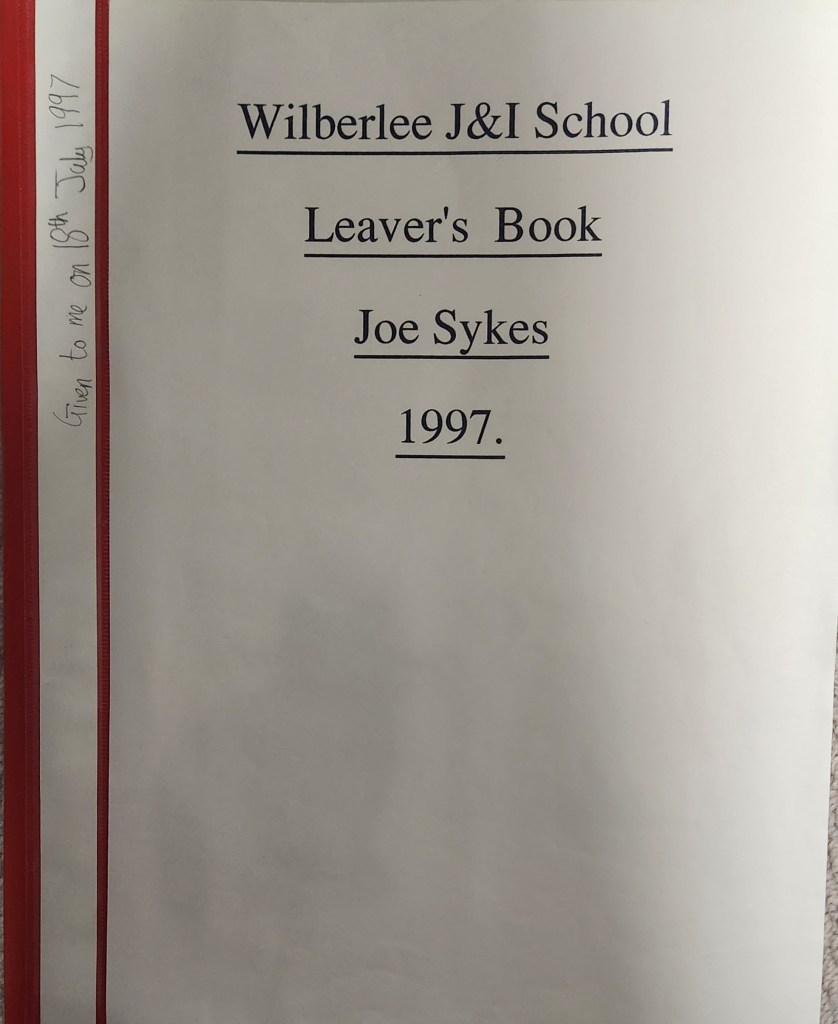
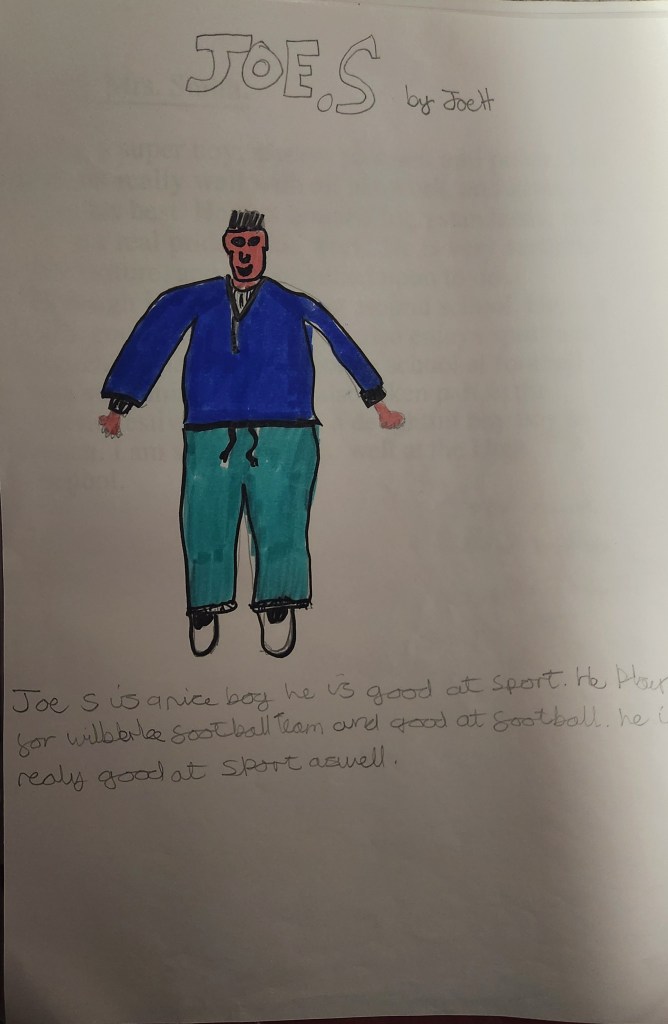
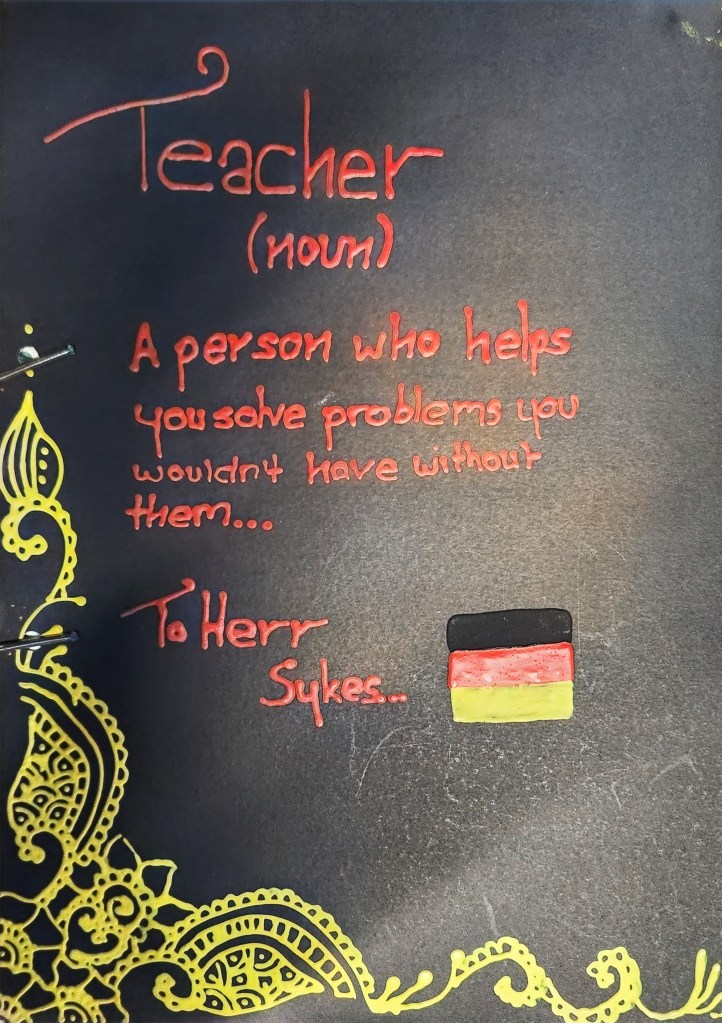
I almost didn’t remain a teacher; I could barely hack the stress and exhaustion of my first school. However, when I left in 2014, my absolutely, wonderful students presented me with a leaving book, not dissimilar from the one from Mrs Smith when I left Wilberlee in 1997: a collection of kind and heartfelt messages. Of course this is real best thing about the job.
Jane Graham
The experience of going to school is very individual surrounded by one’s social situation. Therefore, I can only write about my years from 1940 to 1952. During the first year of World War Two, we used the lovely Victorian school in the village where I remember learning how to put on my gas mask and get under the desk when we heard the siren. I then went to ‘The Hut’ at the bottom of a garden. Both these schools were gentle places with plenty of walks to appreciate nature, participate in hay making, bring in the harvest and pinch the apples overhanging the fields.
At seven I went to the ‘big’ school a mile away. I loved this walk because we had to walk by the watercress beds. (I still love watercress and seeing it grow in clear streams.) Some of the boys ran across the beds which wasn’t allowed. I didn’t! This school was grey and grim outside and dark and grim inside. The teachers used to thump us on our backs when we did something wrong, like colouring in the line drawings in books or not following on when it was my turn to read because I had read further on than the class and lost the place! I remember punishment was always so unrelated to the offence.
When I was ten, I moved again to the school attached to the orphanage. I remember sitting at desks made for two, and you were told who would sit with you. I don’t remember liking this arrangement. The headmaster used the cane; anyone found in the passage was assumed to have been sent out of class for misbehaving! Teachers used the ruler, up and down on the inside of your arm. Very painful. I remember learning some French and listening to radio broadcasts from the Nuremberg trials. The playground was memorable. In the winter the boys made long ice slides. In summer the girls skipped with long ropes and songs. I also learned how to make a Mickey Mouse telephone!
When I was about 14, we went to the Comprehensive School. This was the first time I was aware of learning! My teacher was Mr Watkins, an elderly man who had lost an eye in the first war. I loved him. He introduced us to classical music, great artists, Shakespeare and above all he said I was a maths genius; I could do anything with numbers except get the right answer! In those days there were no O or A levels for us because we hadn’t gone to a grammar school! We just left school!
I must have done well, I don’t know how, because I then went to Holloway Polytechnic. And many years later, a year with the Open University followed by a degree course at Manchester Polytechnic.
Looking back, it was good preparation for the future when I was involved in Free Schools, home education and campaigning against corporal punishment.
Jean Thompson
“School days are the best days of your life”
I’m not sure who said that originally, but it is often quoted. This session led wonderfully by Joe Sykes on school and education generally was very interesting as usual but the discussion which followed would suggest that not everyone feels quite like that about their school days.
For myself I always enjoyed the structure and organisation of school, particularly my Primary School days. I began my school life in Middlesex a few days after my 5th birthday in January 1952. 1952 was of course the accession of Queen Elizabeth 11, with her Coronation following on 2nd June1953. We all received a commemorative mug and had the day off school.
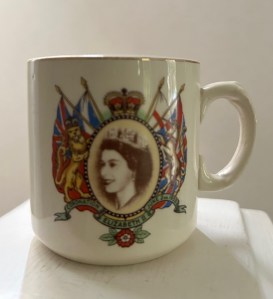
Shortly afterwards we had our own celebratory parade in school, which I led as the Queen of Hearts. Only one photo of that event survives and unfortunately it is a back view of me so I can’t prove I was that special person!
The other highlight from my first school was that I learned to read! Such joy that the black squiggles on the page suddenly had a meaning. I can’t remember exactly how I was taught to read but the joy of that discovery has stayed with me all my life, and Janet and John and their dog (Spot/Tip?) and their adventures are always remembered fondly.
We moved from Middlesex to Manchester when I was seven, and the first memory I have of my new school is that I was teased for my southern accent, which I very quickly lost in order to fit in. As we got older and became more aware of the boys, I remember the games of kiss/catch we played at playtime, arranging to be chased and caught by whoever we liked the most. All very innocent but even so we always tried to organise our chases out of sight of the teachers!
In my last year of Primary School (Year 6 it would be now) one incident still says in my memory as an injustice. I was generally a very obedient and reticent child, but one day the teacher I had then, a very good teacher but known by generations to be strict and scary, accused me of talking to someone when she had told us to be quiet. I knew it wasn’t me, it was the girl behind me, but not daring to challenge the accusation I got whacked over the knuckles with a ruler. The injustice of it hurt me far more than the ruler. However, if we had been ‘good’ all week, on a Friday afternoon that same teacher would read to us for about an hour, and that time was cherished.
The years at Secondary School were also mainly positive, but as we all got older and realised the social divisions that existed, some negative ones as well, probably called bullying now but not recognised as such then. However, I am still grateful for the opportunities that a 1960s Grammar School education afforded.
Tony Goulding
The Best Days of Your Life?
This month we reflected on the experience of our time in education and the significant influence it exerted on our lives. My initial thought was of the impact, mirrored by most of my generation, of 11+ exam. This selection process was quite traumatic itself and, in many cases, resulted in the break-up of friendships formed in primary school.
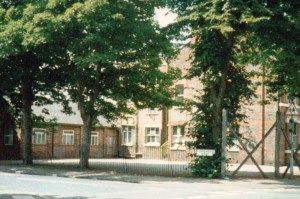
I still think of my best friend, Michael Heaney, of that time who I lost touch with when we moved to different secondary schools. I did, however, form a small number of friendships during my schooldays which have continued until this day.
Selection continued throughout for me and many others in secondary school. In my case I was placed in the top class and fast-tracked to complete O levels in four instead of the normal five years. I certainly feel the process of tainting so many children as “failures” while giving the others elitist tendencies was very questionable.
Many of the group had experience of being a provider as well as a recipient of education. Coincidentally a fellow member of my sub-group was like me a “failed teacher” having started a teacher training course but leaving before completing it.
Prior to my ill-fated time as a trainee teacher at Northeast London Polytechnic I had been a volunteer for three months at Ramsden Heath, Nr. Billericay, Essex a residential school for “maladjusted” boys and have some fond memories of my time there.
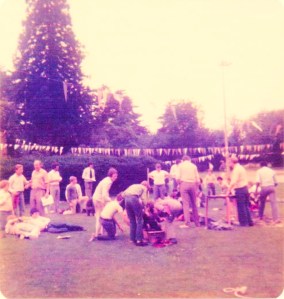
A final thought, although we focused on our traditional schooling “education” is really a lifelong process. As we go through our lives, we both must continue to learn and in turn pass on our knowledge, experience and expertise to others.
I suspect this is now more imperative than ever with the speed of technological change.
Margaret Kendall
We were gathered round the piano in the corner of the classroom. With panache, he opened the black hinged case to reveal his clarinet. The whole class gasped at the shiny instrument and were entranced when he started to play his favourite tune, “Stranger on the shore” by Acker Bilk. A warm feeling of pride spread through me. For that moment, he was Dad, not Sir as he had to be during the day, as Head Teacher of my primary school. I don’t remember the music lesson he no doubt went on to give, but I do remember the other children asking me about his clarinet playing afterwards in the playground and continuing to feel proud of him that day.
I only remember that one time of him playing the clarinet at school, maybe it was a more relaxed lesson towards the end of term. I have many more memories of being uncomfortable because he was the Head, being asked questions like “does he use the cane at home?” or being teased when I got good marks “you only do well because your Dad helps you at home” or even (from a teacher) “just because your Dad is the headmaster don’t think you’ll get away with that!” Looking back, Dad had to play an authoritarian role, schools were so much more formal and stricter in those days with corporal punishment the norm, especially for the boys. We sat in rows of lidded desks with inkwells, facing the chalk-covered blackboard, boys on one side of the classroom, girls on the other. I enjoyed learning new things, naturally did well at school and always enjoyed reading. We weren’t given homework, so I don’t remember being given extra help at home, although both my parents would have been interested and encouraging. School must have been so much harder for the children for whom learning didn’t come easily.
Dad was a different person at home: I remember playing board games, having fun in the garden, going for walks on a Sunday afternoon. Mum did all the cooking and most of the housework, but he looked after us on Saturday mornings to give her a rest and I remember shared joy at some of the songs played regularly on Children’s Choice on the radio.
Jolene Sheehan
When I think about school, I think about friendships and the moments of shared creativity more than anything academic. I remember writing a twin story with my friend Rebecca. We were completely absorbed, inventing a detailed whole world where we were the same but different. Sadly, our teacher didn’t get it, thinking one of us was cheating and copying the other. The truth was, it was an early attempt at collaboration, a kind of joyful hive mind between us.
Another key memory is of Julie. I’d just started Year Seven and I didn’t know anyone. I was sitting reading on my own again at breaktime when she approached me and said, “Would you like to play?” Just like that we bonded and have been friends for 38 years since. That moment of warm invitation shaped me more than any classroom lesson. So many of the good things in my life have come from people just asking, in a variety of ways, “Would you like to play?”
Later, as a teacher, I carried that same desire to create space for play, connection and creativity. I remember one of my earliest teaching experiences, working one-to-one with a girl called Nolene. (The fact our names rhymed delighted us). She wasn’t a student people expected much from. But when I supported her with a poetry task, about a dragon, something beyond words was created between us. The fiery breath of inspiration that lifted us both.
In my early teaching career as a secondary English teacher, there was more scope for my enthusiasm for creativity to be shared. I had time to write and share half-written stories with cliffhangers and strange twists, and to create resources that allowed students to engage imaginatively. I especially loved the times when we went off script, the philosophical chats that started with a tiny question and turned into something sprawling and alive.
But over time, more and more emphasis was placed on immediately measurable results. It reflected a shift in policy that school leaders and teachers were expected to follow, whether we agreed with it or not. This system didn’t always recognise the value of presence, imagination, or relationship. It became harder to work in ways that felt true to me.
It took me 22 years of teaching to realise it wasn’t the best fit for me. But I also see now that I needed all of that time to learn organisation, how to work with others, how to lead, how to listen, and most of all, to understand what matters to me, who I am, and what I have to offer. So, when I hear the quote, “Those who can, do. Those who can’t, teach,” my response is this: by teaching, we learn, and then we can do.

 The Stories of Our Lives