Shane opened our meeting by reading a piece he’d written in advance relating to the question “Where were you when..? The discussion which followed included key events over the past sixty years and explored a variety of themes, for example: imperfect memories, the blending of fiction with fact, differing perspectives, the relationship between micro and macro events, time, tragedy, and upheaval. Read on for thought-provoking and moving stories, reflections and poetry written by some of the members of our group.
Shane Murray
A little history
Ellen was not in her element. The dirt and the squalor made her grieve for her childhood home – beautiful Ballinvaugh, the very sound of it a poem. She held that memory close. It set her apart from her neighbours, talking in small groups, arms crossed, eyes narrowed; watching her, weighing her up.
After sweeping and stoning the step, she opened the front door on to a long, dimly lit lobby which ended in a tiny kitchen at the rear of the house beyond the staircase. She blessed the closed door for muffling the noise of the street and cursed it for thickening the gloom in the narrow passage.
“Oh well, time to light the gas mantles.”
Two doors led off the lobby, the first to the front room – home to Mick Bowen, the lodger – and the second to the back room, the family’s sitting room for most of the week, apart from Saturdays when it doubled as a bathroom, the tin tub employed for the weekly ablutions. She felt a brief surge of resentment of the small, shabby space the family shared while Mick occupied the whole of the front room. The best room in the house. But then he was ‘a paying guest.’
A new decade brought her some semblance of comfort and prosperity. The gas mantle gave way to electric light, the radio to television. In 1963 the slum clearance programme was finally launched. The university was expanding up Oxford Road and the Council sent letters informing residents that the land their houses stood on was under a Compulsory Purchase Order. The Manchester Evening News trumpeted a startling plan for an elevated motorway to run through their streets. Ellen and Jim were jubilant but others dismayed at this disruption to their lives. And so the slow, steady process of rehousing began. Families had three choices of accommodation, a semi in leafy Burnage the best of the bunch. Ellen started to plan her escape.
On the evening of Friday 22 November, three weeks after the feast of All Saints, her joy was suddenly extinguished. The family sat around their small TV in disbelief. A story was unfolding, expanding and repeating itself endlessly. Grainy images of speeding automobiles, police cars’ lights flashing, sirens blaring, tearful bystanders. A high powered rifle. And a photo of a man with a boyish, querulous face. And the victim’s portrait, smiling from the frame on the wall above the TV set. President Kennedy assassinated.
Jane Graham
It wasn’t just fasting on Bromley High Street each Saturday the school students did to make the world a better place. Aware of the deprivations suffered by so many people in so many countries in what was called the Third World. They were also keenly aware that victimisation was happening only a few miles down the road. How to protect the gypsies from exclusion from their traditional nomadic stay on Hosey Common?
This lovely woodland where local residents walked and picnicked was an area where families of gypsies traditionally spent several weeks each year. Bromley Council had to make a decision. Some residents wanted them removed and prevented from coming back. Others, maybe those who had bought a small bunch of white heather on their doorstep, accepted this temporary inclusion in the area, knowing that when the fruit harvests were ready the gypsies would move on.
The combination of families living an open air life, the wind and weather all these had caused rubbish to be evident among the trees and shrubs. Living in houses, we all know what to do when our small areas are invaded by something we have not chosen. We pick it up! This solution was adopted by our committed young people.
When John Kennedy was assassinated in 1963 local issues were more important!
Jean Thompson
I was there
The 1960s. The swinging 60s for some although not for all. But I was there, all through the sixties I was there. The 60s was the decade when I grew to adulthood. 13 when it began and an adult when it came to an end.
A time of great social change and educational opportunity, and for me and my contemporaries, a time to consider the world around us.
In that world, war and assassinations, space travel and protests, but for us here The Beatles exploded onto the music scene, warming many a young girl’s heart. Colours suddenly became bright after the rather dour 50s, and all the lovely young things paraded in their Mary Quant clothes.
A very significant book I read at that time was “The Shorn Lamb” by John Stroud, a copy of which I still have. A story of the work of a Social Worker for children and families, it came to me at the right time, when I, like many young people of the 60s, were looking for a purpose to life, a meaning.

So having decided on a route to save at least part of the world around me, I applied to University for Sociology/Social Studies. My hopes crashed as although I got my 3 A Levels the grades were not enough to guarantee me a place. At the suggestion of my Headteacher, I got a last minute place at a Teacher Training College in Manchester. That was wrong on two fronts. It was in Manchester so I was expected to continue to live at home (not good for my development) and I hadn’t really thought about teaching.
The chaos and disaster of my first teaching practice is a story for another time! Suffice to say I decided to leave the college after the first year. I went to work for the local authority and found I enjoyed work. I enjoyed the independence that earning my own money brought and found I was actually good at what was demanded of me.
As the decade came to an end, I got a job as an unqualified social worker, eventually qualifying later in my 40s, a husband, two children and five moves of town later. So I was there in the 60s, saw huge changes in education and housing and social norms and also developed resilience, persistence and determination to get where I wanted to be. Not particularly swinging but I wouldn’t have missed it for anything!
Margaret Kendall

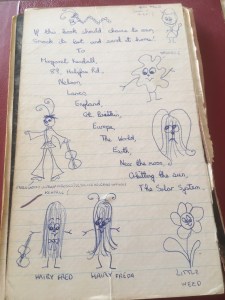
I’d forgotten all about that diary, tucked away in a box of miscellaneous things I’d labelled “Memories” many years ago. It’s very small and its orange pages are covered in tiny writing in pencil, but I haven’t forgotten the moments described in it, especially the morning my siblings and cousins came downstairs to find our excited uncle talking about the first moon landing. It was the school summer holidays and he’d brought some of my cousins from St Helens to stay with my family. He’d spent the night, not in his makeshift bed in the living room, but glued to the flickering black and white TV to watch until the astronauts from the United States took their first steps on the moon. We were amazed, not only by the replays of the landing, but also that the TV had been broadcast all night for the first time, and from outer space!
Thinking back now, although that was a thrilling moment, space exploration featured in my life in the years leading up to that success. There were countdowns on TV as rockets took off, programmes explaining how the astronauts trained for weightlessness, the dehydrated food they had to eat, how their space suits worked (including how they went to the toilet!). I remember watching footage of another key moment when an astronaut left a space capsule to “space-walk”, floating around attached only by a cable. It captured my imagination and I knew that it was a “space race” between the Soviet Union and the USA, but I don’t know how much I was aware of the Cold War. I talked to Babs about it in our Stories of our Lives meeting, and she has a distant childhood memory of being amongst the crowds in Hulme when Yuri Gagarin, the Russian Cosmonaut who was the first human to travel to outer space, came on a visit to Manchester. There is a short news clip about his visit on from the British Film Institute website.
No wonder that in another notebook in that memory box, I’d written my address in full ending with the solar system. I know that I wasn’t unique in doing that, but seeing that I’d written “close to the moon” surprises me now!
Mark Taylor
I am six, and there are bodies on the TV. Children no older than me. I cannot understand it, and nobody can explain it to me. When I grow up, I will understand it even less. I don’t know what to do, so I lay it down in the soil of my heart, to poison what grows there.
There is a scary page in my science book about all the lights going out.
I am nine, and there is a still blue card on the TV, in memory of a stranger. It is the first day of school. There is a special assembly, then a solemn lesson: we are to write our memories of the tragic princess. I have none. I don’t know what to do, so I copy from a classmate.
Something called “Kyoto” has been signed. They say it will change things, but oh so slowly.
I am thirteen, and there are bodies on the computer screen, a game too bleak and violent for me. Next door, my mum is quiet. When I go through, the towers have already fallen. I watch the footage replay, feeling absurd to have been busy clicking baddies. Mum doesn’t say anything. I don’t know what to do, so I don’t say anything either.
It is the hottest year on record.
I am seventeen, and there are frightened people on the TV, and a shattered London bus. I am at a university open day, alone. My mum is in London. I can’t phone: everyone is phoning. I don’t know what to do, so I look around the English faculty, and wait.
It is the hottest year on record.
On the screen, every post is about an MP shot and stabbed, not far from where I grew up. I don’t know what to do, so I scroll and scroll.
It is the hottest year on record.
On the screen, every post is about a stabbing. About a shooting. A virus. An invasion. An attack. A genocide. Bodies of children no older than my son. I don’t know what to do, so I scroll and scroll and scroll and scroll.
It is the hottest year on record.
It is the hottest year on record.
It is the hottest year on record.
I don’t know what to do.
Pauline Omoboye
I was in Ibiza when the 9/11 attack took place. I remember crowds of people around the hotel television speechless,stunned and devastated by what they could see.
I went to my room, crying for all lives lost and wrote this poem.
9/11

Did you watch in deep shock?
Hear those screams on the screen?
As another body come hurtling
In that horrific live scene
From a building so high
Bent neck you can’t view the top
Or imagine the destruction at the end of each drop.
The scene is mass murder
I watch in deep shock
The truth is revealed in each coverage shot.
The aeroplane straight through the heart
Pure slaughter
And deep from within
Someone’s son, mother, daughter
The ashes of death lay
Scattered far from home
From its glass covered belly
These victims were thrown.
The total atrocity shown across the nations
Scenes of sheer carnage total devastation
These men saw destruction
Had a plan, their creation
Changed the world in that moment
Shook the hearts of nations.
But in times of great turmoil
When all humans are tested
Right there in the rubble
People’s bodies digested.
With the bravery of people, smoke covered faces
The fire service offered hands outstretched to all races
The enormity of what has happened
As they face a heart full of loss
Valuable people innocent lives it cost.
This tragedy felt worldwide we sense there’s no gain
Why wasn’t it raining to dampen the pain?
To put out the fire to help just a little
Instead, steel frames melted they looked so brittle
People at windows, seeing, no voice left to shout
Dropping or throwing their bodies out.
The scene almost unbelievable a direct hit
Some stayed like the captain in the cockpit
As flames bellowed and engulfed those lives that were taken
The scene of mass destruction the conscience awakens.
 As a poet my words like water a constant flow
Like those lives we lost, one by one they did go
The pain of the world appalled and disgusted
Not knowing what’s safe or who could be trusted
These scenes of carnage faced the world with despair
911 a memory that will always be there
So treasure those near to you, take a grip, and hold them close
Join me in 2 minutes silence for they had no choice
I’m here to tell the story and give them a voice.
(2 minutes silence)

© P. Omoboye. I wrote this poem immediately after the tragedy
Tony Goulding
Unfortunately, I missed what I suspect was a fascinating session on significant events, how we remember them and how they may impinge on our everyday lives.
Former generations would most likely reflect on hearing a declaration of war in 1914 or 1939 or the celebrations in 1918 or on V.E. Day in May 1945.
With the advent of firstly radio and later television, memories of significant events often became a shared experience; crowding around a radio set on the morning of Sunday 3rd September 1939 listening to Neville Chamberlain’s Broadcast or on a happier note cramming into a neighbour’s living room who was lucky enough to have a set watching black and white images of the Coronation of Queen Elizabeth on 2nd June 1953. For some, no doubt it would be watching England winning the World cup in 1966 and hearing those famous words of B.B.C. commentator, Kenneth Wolstenholme “some people are on the pitch, they think it’s all over. IT IS NOW!”
Two major incidents in which I recall what I was doing at the time, both occurred in the United States but nearly 40 years apart. My memories highlight how a child may regard world events differently than an adult. The first of these incidents was the assassination of President Kennedy in November 1963 when as a 9-years old child my main concern was the cancellation of my favourite T.V. programme, “Bonanza”.

In contrast when the twin towers came down on 9/11 in 2001, I was so affected by it that I immediately curtailed my pursuit of my family history; only taking up with this hobby again after a gap of several months. On that fateful day I had made my first visit to the Greater Manchester County Record Office, which was then located on Marshall Street in the Northern Quarter.
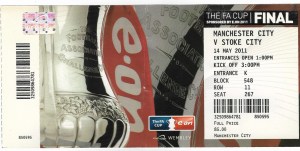
It is interesting how we measure the passing of time by certain significant events in our own lives such as birthdays or other anniversaries or major world events. At present, I am inclined to use as a benchmark, either my departure from working at McDonald’s or Manchester City’s first trophy win for 35 years the 2011 Football Association Cup (to which I was a witness!)

 The Stories of Our Lives
I have really enjoyed reading these stories. Thank you Margaret for sharing the short film.
LikeLike