Hear this blog post read aloud:
At our last session, Sue Ash shared some fascinating reflections on DNA and the ways our stories might be written into us at a cellular level. She spoke about the influence of our genes on different aspects of our lives, and drew out some striking facts and research, from the idea that friends may actually share more DNA than strangers to the way animals use memory and heightened senses for survival.
From there, our discussion opened up into wider themes: intuition, belonging, affinity, family, and the natural order of things. We asked ourselves what it means to feel a deep connection to a place or landscape, how heritage has shaped who we are, and how far our lives might be influenced by inherited aspects we cannot always see.
Some of the guiding questions we chose to discuss are shown here. (Maybe you too could reflect on these and share your thoughts in the comments below?)
- Does any of this story resonate with you in particular? If so, why?
- Have you ever felt a deep connection to a place or certain landscape?
- How has your heritage affected aspects of who you are?
It was a moving and thought-provoking session that encouraged sense-making and research, but also invited us to listen to our intuition and explore our own stories.
Read on to see how participants responded and the insights they shared.
Sue Ash
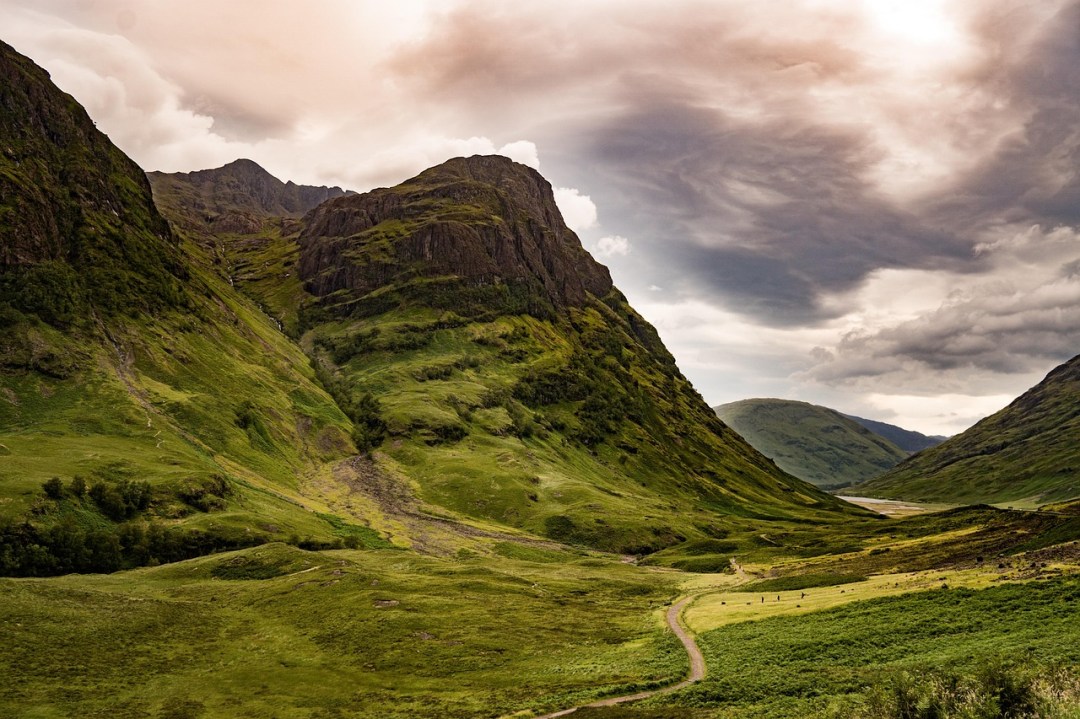
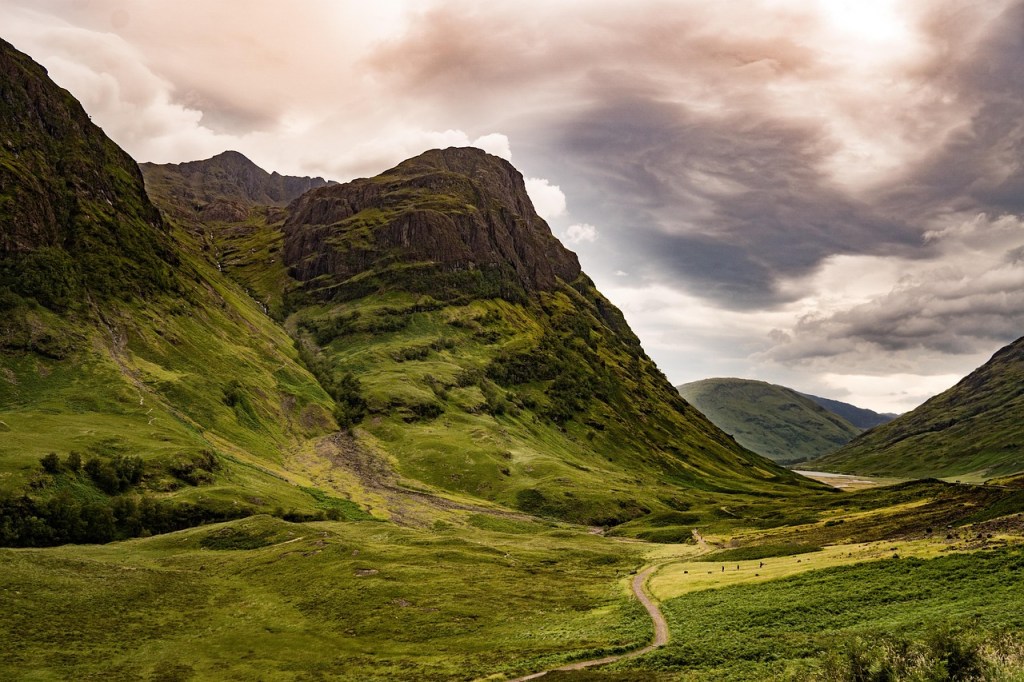
The Glen of Weeping
Following wide fast flowing waters
I enter an ancient landscape.
Tall dark forests
Dripping green with lichen
Tower above banks of snowdrops.
Mists roll down the giant hillsides,
Their tops fringed with pines.
Black mountains capped with snow.
The Good Shepherd watches over us.
In my mind I hear pipers playing,
Feel the souls of centuries past.
In death they are my friends.
For a while
My restless spirit is at peace.
In the Glen of Weeping
I have come home.
Jane Graham
DNA test – what fun to find out what it reveals of the history of a family. Links to places, cultures, ethnicities that might reveal more than what is already known. The information received from the test opens up such wonderful opportunities for creative exploration into fascinating connections with places, people and history. In addition to this our DNA can give dreams, intuitive thoughts, relationships with animals, preferences in friends, and how we do, or do not relate, to family members; understand better our ancestors and how they fit into the historical narrative. All this gives a lot of pleasure and opportunity for creative exploration, discussion and a depth of understanding that had previously may have only been guessed at.
This tool is clearly a wonder for ourselves and our families who are protected from any abuse by The Data Protection Act. Knowing this I still have a deep fear that data can fall into spurious hands that would use it against us and our families. Growing up through the 2nd WW and knowing first hand how political, ethnic, religion or health could mean certain annihilation, I would not trust anyone with my DNA. As I write, however, it is already out of my hands because some of my grandchildren have already received their results of the test. From this everything can be known about me!
Tony Goulding
D.N.A. Stories.
Having studied Sociology at University, I have always been inclined to favour nurture over nature when looking at human behaviour. Environmental factors being more influential than genetic ones.
It was therefore with a degree of scepticism that I considered this topic.
I knew from my family history research that more than half my ancestors had Irish origins with the remainder being a mixture of Scottish and English. I recently was persuaded to take a D.N.A. test and was pleased (and a little relieved) that the result confirmed my research.
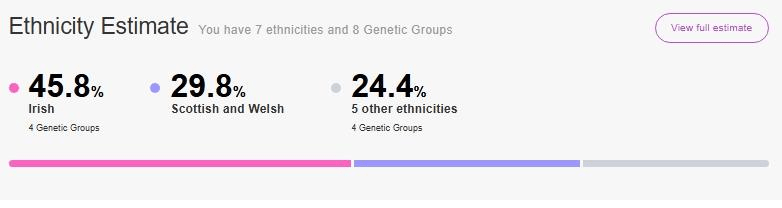
The full breakdown was a little more revealing;
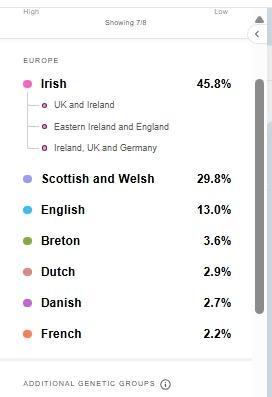
apparently, I am quite a European!
Reflecting on what stories my D.N.A. might reveal I did recall a couple of occasions in my life where I felt a strong connection to an area, and I wonder now that this may have come from my genetic make-up.
One instance was while I was hiking on some moorland; was my affinity to the windswept wilds due to the genes of my ancestors from the Highlands of Scotland?
The other occurrence was my first arrival in Dublin, Ireland when I felt a strong sense of it being “home”.
I am still undecided whether these incidents genetically based or were mere romantic fantasies.
Jean Thompson
This was a brilliant presentation from Sue Ash, about the importance of DNA in our life stories and memories. Does our DNA influence our memories and links to nature and places which we may not have visited actually? It was interesting and inspiring and generated lot of reflection and discussion amongst the group.
Sue illustrated just a part of her story with her own experience of a visit to Glencoe when she immediately felt an affinity with its history and surroundings even though it was the first time she had been there. Later uncovering some of her family history she discovered that she did indeed have a Scottish heritage and some of her ancestors could have been at Glencoe.
Sue’s presentation dovetailed very well with the previous session led by Merryn Myatt who talked about memory and how to write memoires and again the influence of DNA in how we respond to those memories.
After Sue’s presentation the discussion went in several directions. Although DNA is basically a scientific concept, what is the importance of other influences in our memory? Environmental and spiritual factors (not necessarily religious) were equally important. We are not just the product of DNA, nor should we think our DNA governs all of our actions. We have the ability to think situations through and make independent decisions.
There was a very thoughtful discussion on how people in the same family with presumably the same DNA, were so different in outlook, attitude and behaviour. Sue quoted a very interesting study by James Fowler of the University of California in San Diego that people tended to make friends with people with similar similarities in their DNA. It made me think of the familiar quotation “you can choose your friends but not your family”. From his research James Fowler further suggested that pairs of friends had the same level of genetic relation as people did with a fourth cousin or a great-great-great grandfather. How did this fit with people who had become great friends with people from different countries or cultures?
Fascinating ideas to think about!
Lindy Newns
https://m.thewire.in/article/history/james-skinner-anglo-indian-master-cavalryman-delhi-haveli/amp
I am light skinned, fair haired and I look and sound like a regular Englishwoman but I am a descendant of an Indian Rajput noblewoman (a breed known for their fighting spirit) and a “country born” soldier who is still remembered in India perhaps for the church, mosque and temple he had built in Delhi. Or perhaps because he fathered children in every village to the North West of India (and that in addition to those he had by his six wives).
His name was James Skinner, but they called him Sikander Sahib, comparing him to Alexander the Great.
“Country born” is what the British East India company called mixed race men and they did not allow them to serve as officers in the East India Company army, so what did my ancestor do? Enlisted in the French army and, eventually, set up his own regiment, which still exists as 1st Horse or Skinner’s Horse and which was invited to serve in the East India Company Army.
I like to think that, given the chance, I’d be a warrior like him, but I’m not keen on getting onto a horse, or killing people. It’s a shame, but my DNA doesn’t carry the warrior gene.
Instead, my inheritance is just high cholesterol, common in Indian men and women and an ongoing internal debate about whether I should take statins or not.
Plus the knowledge that I, like so many British subjects, thanks to our empire building and ransacking countries all over the globe, am a mongrel, with a large dollop of Indian DNA flowing through my brains,
I wonder where my dad’s family came from. I suspect France, but who knows? It could be anywhere in Europe or Africa or Asia. Maybe I’ll do a test and find out one day!
Anne Delargy
1

Water has no DNA.
It does not need it to survive or reproduce.
It has already learned everything it needs to know.
Only it is teeming with the DNA of others:
Plants, animals, fish.
Even human beings.
No two rivers are alike,  no two oceans.
Each carries its own load, its history  of contacts and of other lives
Ever moving, never still.

2

They say that  water
Feels emotions, and understands our language.

If I utter angry words
Over a bowl of water
It reacts, its molecules retract,
It produces ugly, jagged crystals.

If I laugh for joy in the presence
Of water, it creates beautiful,
Orderly structures that bring delight

And when I wash my hands in
That generous, gushing fountain
It absorbs all my fears
And recoils from all my pain.

3

We all come from water
She whispered, soft as a
Rustling stream.
Our mothers bring us forth
In gushes of womb water
Our home for many months
All our lives we yearn for that water
And long for its return

Water is in our DNA,
She murmured, urgent as a river
Rushing for the sea.
We all belong to water.
And my mother is the mighty
Magnificent Atlantic, the wild and stormy
Dark ocean, the hoarder
Of deep mysterious creatures
That travel massive distances
Encompassing the world  around.
The ocean of the exile that brings us
To a New World or to death

And yours, she laughed,
Happily as a waterfall;
Yours is the peaceful, playful
Mediterranean, the sea without tides
Or tempers,  the centre
Of it all, the home of dolphins
And bountiful harvests
Of dates and olives,  sweet
Oranges and grapes
And from your skin arises
A musky citrus, warm and clinging.
But my body is cold and wilful,
Cold and salt.
We all come from water, she sighed
Like a wave  upon the shore.
From the time we arrive here screaming
To our quiet exit, empty and washed clean

4

There's one place in the world -
Tarifa - where sea and  ocean meet.
The blue sparkling Mediterranean
The deep grey Atlantic
It is impossible that they don’t
Flow into each other, mingle their waters;
Those few kilometres of water
Running alongside each other
Between the two continents of
Africa and Europe.
It’s impossible that they don’t  combine.
Impossible but true.

 The Stories of Our Lives
Great session and newsletter, Jolene. Thanks. A
LikeLike
Hi Jolene,
I love reading about your sessions but don’t seem to get advance notice? If there’s room for one more, I’d love to know about them.
Many thanks
Louise
LikeLike
Hi Louise. Thanks for the positive comment. The session dates are on the website on the come to our session page, where you can also book. If you would like emails to remind you, you can send your email address to me at jolene.joyethic@hmgmail.com
LikeLike
Once again, Thank You! It was so good to read the offerings from the DNA session.
LikeLike